Is an SB9 Lot Split Right for Your Los Angeles Property?
Considering an SB9 lot split in Los Angeles? Learn about eligibility, the ministerial approval process, and the costs involved in dividing your single-family property.
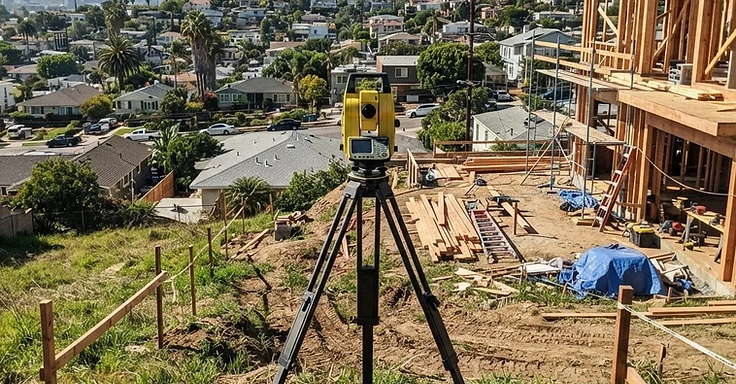
Own a single-family home in Los Angeles? You have probably heard you might be able to divide your land. The talk about residential density around here is still heating up for 2026. Most folks just look at ADUs, but an SB9 urban lot split is a different animal because it changes your property's legal status. Senate Bill 9, or the Housing Opportunity and More Efficiency Act, is a state law meant to boost housing by making it easier to build on existing infill lots.
We see homeowners at 1 Smart Build asking if they can split their lot to build another house or sell off a piece of the dirt. It is a complicated process. But for the right property, it is a solid move. SB9 lets you split single-family lots through a ministerial process. It is our way of getting more smaller homes onto smaller lots to help with the local housing shortage.
Key Takeaways
- Each new lot you split under SB9 needs to be at least 1,200 square feet.
- We need to make sure the two lots are roughly equal in size. Each one has to cover at least 40% of the land we started with.
- The SB9 process is ministerial. That means the city approves it based on clear standards, so you won't deal with public hearings.
- You have to sign an affidavit promising to live in one of the units for at least 3 years as your primary residence.
- So, how long does this take? An SB9 lot split usually runs 7 to 12 months. It really depends on the site and how fast the city moves.
What is an SB9 Lot Split?
Senate Bill 9 lets us take eligible single-family lots and divide them into two legal parcels. Most subdivisions force you through messy public hearings, but an SB9 split is supposed to be ministerial. If your plans hit the city's objective marks, you get approval without that public headache. Once we split the land, you could put up to two units on each new parcel. It’s a solid way to house family, stack up some rental income, or just sell off a piece of the dirt.
Keep in mind, this process is strictly about chopping up the land. It doesn't include any houses or accessory dwelling units on its own. We have to record a final map before anyone lays a single brick. After that map is on file, the city reviews the site plan to okay your build. An SB9 split isn't just tossing an ADU in the backyard. You’re creating two distinct properties that get their own tax bills and deeds, provided you stick to the rules set by the Los Angeles City Planning department.
Does Your Property Qualify?
Not every lot in Los Angeles works for an SB9 split. We need to check if your land is zoned for single-family residential use. Location matters too. If you are sitting in a fire hazard zone, a floodplain, or a coastal area, expect extra hoops to jump through. You have to sign an affidavit promising to live in one of the units as your main home for a specific amount of time. And the state law says this parcel can't have been split by an urban lot split before. We also can't touch it if you or anyone working with you already subdivided an adjacent lot under SB9.
So, the first thing we do is check the ZIMAS tool from Los Angeles City Planning. It pulls up your zoning and any overlays that stop a split. If your lot is too small or has environmental issues, it is a no-go. But we also have to make sure your project won't cause harm to public health, safety, or the environment. Some of these things can be fixed, but if your property is in a protected zone or has nasty topographical challenges, you need a pro to look at the site before we even think about an application.
The Process and Timeline
An SB9 lot split is a heavy lift. It won't happen over a weekend. We coordinate with you and the city to keep things moving. We start by checking your lot size, setbacks, and utility access to see if the project works. Then, a licensed land surveyor maps out the boundaries and topo details to set your new property lines. We draft a tentative parcel map so each lot clears the 1,200 square foot hurdle.
We submit the plans once they are ready. The city then coordinates with public works, fire, and planning. Since it is a ministerial process, they check against objective standards instead of design taste. But you have to be careful. Incomplete or messy info stops the clock. After the city signs off on the tentative map, you wrap up the final recording. Now you have two legal lots. The timeline runs 7 to 12 months. It really depends on your site and how fast the city works. So, bring your affidavits and engineering reports on day one to keep the site moving.
What Drives the Cost?
An SB9 lot split needs a real budget. Costs depend on your parcel, but you have to pay for professional fees, application filings, and engineering work. For a typical project, expect to pay between $15,000 and $100,000 to get those two legal lots on paper. And keep in mind, that money covers permit processing and pros, not the actual construction of new homes. We see costs climb because you need specific reports like drainage plans and utility letters. Plus, a licensed land surveyor has to physically mark the new property lines. You will need a registered civil engineer to hammer out that final parcel map too.
You have to pay the city to file these projects. Those fees change based on where you live and what your specific plan looks like. So, always keep a contingency fund ready. The city might suddenly ask for extra grading plans or water quality documents while they review your file. Just remember, this money pays for the legal creation of the lot. You need to budget construction costs separately if you plan to build homes on these new parcels. We can help you run the numbers on the total scope of your land division and any future residential build you have in mind.
What Drives the Cost?
Planning an SB9 lot split takes more than just a permit fee. Every lot is unique, but we know you need to account for professional fees, city applications, and engineering work. For a typical Los Angeles job, expect to spend between $15,000 and $100,000 just to get two legal lots on paper. This won't cover the actual construction of new homes. So, keep in mind that the final bill shifts depending on how rough your terrain is, the state of your old utility lines, and what the city inspectors demand.
Specialized reports add up fast. You will need a licensed land surveyor to handle the topographic survey and drop physical monuments to mark your new property lines. That usually runs $5,000 to $15,000 based on your parcel's size and slope. But you also need a civil engineer for drainage plans. Los Angeles insists on Low Impact Development plans to handle storm water runoff. Those alone cost $3,000 to $8,000. And if your lot sits on a hill, tack on another $2,500 to $6,000 for a soils report.
Don't overlook utility separation. Since you are creating a new legal parcel, it needs its own connections. The Los Angeles Department of Water and Power often mandates new water meters and electrical service points. We tell our clients to set aside $5,000 to $15,000 per lot for these connections. Then there are the city filing and processing fees. Check the latest updates on the LADBS website so you know what the office is charging. If you understand these numbers now, the invoices for engineering wont catch you off guard.
SB9 vs. ADUs: Which Path is Right for You?
Homeowners often ask us if they should just build an Accessory Dwelling Unit instead of an SB9 lot split. It really comes down to your financial goals. An ADU is usually faster and cheaper to build. You avoid splitting the land and the permit process goes much smoother. But, you can't sell an ADU separately from your main house here in Los Angeles. It stays on the same deed. So if you just want more rental income without the headache of a subdivision, an ADU works. You can check state-level guidance on these units at the California Department of Housing and Community Development.
An SB9 lot split is more involved, but it gives you different financial options. By splitting the lot, you create two distinct pieces of real estate. You could build a house on the new lot and sell it while keeping your own place. This is a practical way to build equity or pull out a large sum of cash. And you have the option to build two units on each lot, which could turn a single-family property into a four-unit site. We see this path as better if you view your property as a long-term development project rather than just a quick way to add a guest house.
The rules for each are different too. ADUs have their own state-mandated setbacks and size limits that are usually easier to meet than standard zoning. SB9 has its own requirements, like the owner-occupancy affidavit, which isn't always needed for ADUs anymore. If you don't plan to live on the property for the next three years, an ADU might be your only legal move. But if you are ready to stay put and want to create a separate sellable asset, the SB9 process is worth the extra time and money.
Navigating Los Angeles-Specific Regulations
LA is massive. We deal with local ordinances that complicate SB9 applications all the time. Don't just look at state law; you need to see how the city interprets those rules. Say your property sits in a Very High Fire Hazard Severity Zone. You are going to face much stricter requirements. The LA Fire Department might demand specific brush clearance or access roads. That limits where we can drop a new home or how we split your lot. Check your fire zone status on the ZIMAS system or drop by the city planning office.
The Baseline Hillside Ordinance is another headache. If your lot has a slope, the city restricts what we can build and how much dirt we can move. Grading in LA is strictly regulated. A lot split on a hill draws extra eyes from the Bureau of Engineering. And watch out for protected trees. The city protects species like Coast Live Oaks and Western Sycamores. If your split or the build requires taking one down, you need a permit from the Urban Forestry Division. It can take months to process. Plus, they might force you to plant multiple replacements.
We also keep an eye on the Bureau of Street Lighting and Bureau of Engineering requirements. When we split a lot, the city sometimes demands we improve the sidewalk, add street lights, or even dedicate land for future street widening. We call these off-site improvements. They add thousands of dollars to your budget and drag out your timeline by weeks. Before we get too far, verify your contractor is in good standing with the California Contractors State License Board. They need the right classifications to handle these technical city demands. Knowing these local quirks is how we keep your project from stalling in a department review.
How We Can Help
Dealing with Los Angeles city departments is a full-time job. You don't need to waste your afternoons in line at the permit office or hunting for a civil engineer who actually knows the city's drainage codes. At 1 Smart Build, we handle the entire SB9 process for you. We start by checking your property's specific zoning and constraints to tell you exactly what you can build. We don't guess. We use the same tools the city planners use to verify your lot's eligibility. And we coordinate with the land surveyors and engineers to get your parcel map right the first time so you aren't throwing money away on revisions.
We also manage the communication between every city bureau. We know exactly who to call and what paperwork is required for the Department of Building and Safety, Public Works, or the Fire Department. We prepare the affidavits for you and make sure you hit every objective standard needed for ministerial approval. So our goal is to get you through the 7 to 12-month timeline as fast as we can. We keep you updated on the progress so you aren't left in the dark. You can focus on your long-term goals while we take care of the technical paperwork and site planning.
If you want to see if your property in the San Fernando Valley, the Westside, or Central LA can be split, we'll give you a straight answer. Every lot has its own set of rules and we help you figure them out. You don't have to wonder if you missed a hidden regulation or a specific city fee. Call us at 1 (866) 419-8840 or visit our build-check page for a professional assessment of your land. We're ready to help you make the most of your Los Angeles property and get through the SB9 process.
DISCUSS YOUR PROJECT WITH 1 SMART BUILD
Licensed, bonded and insured design-build general contractor serving Los Angeles County and Southern California. Tell us about your property and goals, and we'll walk you through feasibility, permitting and a clear plan.