Fire Rebuild in Los Angeles: What Homeowners Need to Know in 2026
Rebuilding after a fire in Los Angeles requires navigating expedited permits, 2026 building codes, and complex insurance claims. Learn about the like-for-like rebuild path, Chapter 7A fire-hardening, and current cost ranges for 2026.
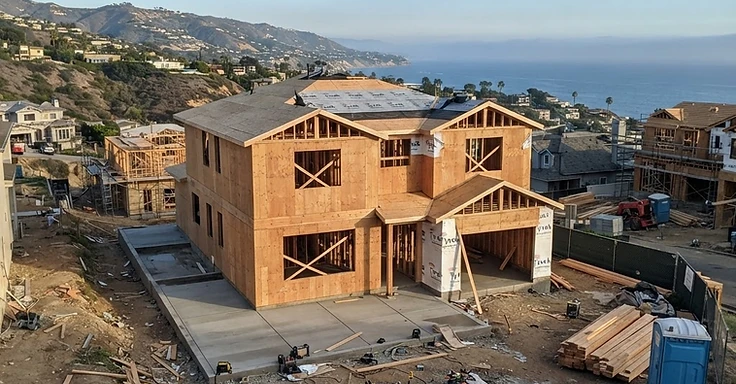
If you lost your home in the Palisades or Eaton fires, the construction isn't the hardest part. It's the year of decisions you face before a shovel hits the dirt. You're juggling insurance scopes, debris clearance, and a maze of permits. On top of that, you have to pick a builder for the next two years. We wrote this guide to walk you through the whole path with real numbers and 2026 updates so you can get back home.
At 1 Smart Build, we've seen how the recovery process in Los Angeles County has shifted lately. Between new executive orders and updated local ordinances, the rules for rebuilding in 2026 aren't what they were six months ago. So, if you're in the Pacific Palisades, Altadena, or Malibu, you need to know exactly what the city and county require before you sign a contract or commit to a design. We're a licensed design-build contractor (CSLB #1076428) out of Woodland Hills. We're here to help you make sense of the chaos.
Key Takeaways
- The like-for-like rebuild program in the City of Los Angeles lets you boost your building footprint by up to 10 percent while keeping your permit status fast-tracked.
- California codes force us to put fire sprinkler systems in every new single-family home. Expect to pay between $0.65 and $2.75 per square foot for those.
- The City of Los Angeles cut out 70 percent of the standard clearances for single-family rebuild permits. That really speeds things up.
- Chapter 7A of the California Building Code says every attic and eave vent in fire hazard zones must have corrosion-resistant metal mesh. Keep those openings at 1/8 inch or smaller.
- Building in unincorporated spots like Altadena? You get to increase your home's footprint by 200 square feet or 10 percent. We use whichever number is bigger under the county's fast-track path.
The Like-for-Like Rebuild Path in Los Angeles
The City of Los Angeles and LA County set up fast-track approval paths for fire rebuilds so we can get your family back home sooner. The heart of this is the like-for-like provision. If you rebuild a house that looks and acts the same as the one you lost, you get to bypass most of the discretionary reviews that usually stall custom projects. So, you won't have to sweat through long zoning hearings or fight the standard floor area math that applies to new construction.
Understanding the 110 Percent Rule
This shortcut works if you stick to specific size limits. In the Palisades Fire area, the Los Angeles Department of Building and Safety (LADBS) usually lets you grow your footprint by up to 10 percent. Over in Altadena, which is under LA County, the rules are a bit looser. They let you increase by 10 percent or 200 square feet, whichever is bigger. Staying inside these numbers is the difference between a permit in three months and one that drags on for a year. But if you want a much bigger house or want to add a second unit, expect to get pushed back into the standard review queue.
Recent Streamlining Efforts
As of 2026, the permit process is moving faster because of state intervention. Recent orders dropped certain CEQA and Coastal Act requirements for fire victims. This is a massive help for homeowners in Malibu or the Palisades who would normally face months of environmental paperwork. The City of LA also cut about 70 percent of the standard clearances you see on normal single-family permits. The rules aren't gone, but the city is pushing your file to the front. You still have to follow the code, but you won't waste time waiting for departments to sign off on things that have nothing to do with your rebuild.
Navigating Debris Clearance and Lot Certification
We can't pull your building permits until the lot is cleared and certified. It is a two-phase slog. Most homeowners hate this part because it feels like everything is stalled while paperwork sits on a desk. Phase 1 is the removal of hazardous waste like batteries, pesticides, and asbestos. Phase 2 covers the actual ash and debris. If you went with the government program, you get a certificate when they finish. But if you hired a private firm, you have to prove they followed all the county protocols and grabbed the right sign-offs.
The Importance of the Clearance Certificate
Every permit application you file later will demand your debris clearance records. Without them, your project hits a wall. If you are rebuilding in Altadena, you will work with Los Angeles County Public Works to verify the lot status. They keep a database of these properties. We will need to plug your specific clearance number into the EPIC-LA system before we start. Do not lose these papers. They are just as valuable as your deed during the first six months of this recovery.
Private vs. Public Cleanup
The government program is free if you have limited insurance. But plenty of homeowners in places like the Palisades went private to save time. If you went that route, you are on the hook for a final soil analysis that shows the lot is clean. This report tells your structural engineer that the ground is safe for a new foundation. If your contractor didn't test the soil to the county's exact standards, you might end up re-excavating. That can add thousands to your costs. We always tell folks to check the CSLB license of any debris removal firm to make sure they are actually qualified to handle hazardous waste.
2026 Building Codes: Chapter 7A and Fire-Hardening Requirements
Even if you're doing a like-for-like rebuild, your new house isn't a carbon copy of the old one. We have to build to today's code, not the rules from whenever your original home went up. For most fire victims in Los Angeles, that means full compliance with Chapter 7A of the California Building Code. This chapter focuses on materials and construction methods that resist exterior wildfire exposure. It's not just about the big things like siding. It's about the tiny details that stop embers from getting into your attic.
Exterior Protection and Vents
We rely on ignition-resistant materials. Your roof needs a Class A fire rating, and your siding must be non-combustible or specially treated. Vents are a big deal in 2026. All attic, eave, and underfloor vents must keep flames and embers out. The standard calls for corrosion-resistant metal mesh with openings between 1/16 inch and 1/8 inch. Many of our clients now choose specialized ember-resistant vents tested and listed by the State Fire Marshal. These provide much better protection during wind-driven fires.
Fire Sprinklers and Energy Standards
Every new home in California, fire rebuilds included, must have an interior fire sprinkler system. This adds to the cost, but it's a non-negotiable safety feature. You'll also meet the latest Title 24 energy efficiency standards. So, expect better insulation, high-performance windows, and potentially solar panels, depending on the size of the rebuild. These requirements feel like a burden after a loss, but you end up with a home that's safer and cheaper to run than your old one. We work with you on these choices so you hit the code requirements without blowing your budget on extras you don't need.
Estimating Rebuild Costs and Timelines in 2026
Rebuilding after a fire is a custom job, and the price tag shows it. We aren't just buying lumber and bricks. You're paying for the specialized engineering and labor it takes to build right here in Los Angeles. In 2026, costs swing wide depending on your lot and the finishes you pick. These are planning ranges, not fixed quotes. Every lot brings its own set of headaches.
Current Planning Ranges
- Flat lot with standard finishes: $400 to $525 per square foot. That gets you a solid home with modern amenities and materials that meet current code.
- Flat lot with high-end finishes: $525 to $675 per square foot. We see this in places like the Palisades where you want custom cabinetry, stone, and smart home tech.
- Hillside or view lots: $650 to $900+ per square foot. You're paying for complex foundations, caissons, and the trouble of hauling equipment up narrow canyon roads.
- Soft costs: Budget another 8 to 15 percent for design work, structural engineering, soils reports, and permit fees.
Realistic Timelines for 2026
A fire rebuild takes longer than most folks expect. Even with expedited permitting, it is a multi-year slog. Design and engineering usually chew up 2 to 4 months, especially if we have to hunt down original plans or meet new hillside codes. So, count on another 1 to 4 months for LADBS or the County to finish their plan check. Once we have the permit, construction on a typical house takes 10 to 16 months. From the day of the fire until you're back home, you're looking at 14 to 24 months on a normal lot. Hillside builds can easily stretch to 30 months. But working with a licensed contractor who knows this system is how you keep things moving.
Maximizing Your Insurance Claim for Code Upgrades
Getting what you're owed from your insurance isn't about handouts. It's about holding your carrier to their contract. Most policies include Law and Ordinance coverage. This sits outside your dwelling limit. It exists specifically to pay for bringing your home up to 2026 building standards. If your older home lacks fire sprinklers or modern insulation, your basic dwelling coverage won't cover the bill. You've got to tap into that code upgrade bucket. In Los Angeles, the California Energy Commission enforces strict Title 24 standards. These can tack on $20,000 to $45,000 for solar panels and high-efficiency HVAC units. Your adjuster might just look at basic square footage and ignore these extras. Don't let them slide. You need to hand them a breakdown showing exactly what the new codes demand. Fire sprinklers alone run $3.00 to $6.00 per square foot. That depends on your water pressure and how the house is laid out. Then you've got Chapter 7A fire hardening. Ignition resistant vents and tempered glass windows aren't optional in fire zones. If your insurance adjuster leaves these off the scope, their estimate is wrong. We suggest getting a line item bid from a builder who actually knows LA codes. So, when you hand that to your adjuster, you change the conversation. It moves from a guess to showing them the specific codes we're legally required to meet. This often involves fire-rated siding and roof materials that weren't even a thing in the 1970s. And if you don't fight for these costs, you'll be paying for them out of your own pocket. That makes a massive difference in your final settlement.
Design-Build vs. Traditional General Contracting for Fire Recovery
You have two main paths when starting a rebuild. The traditional route means hiring an architect to draw up plans, then bidding those plans out to a few general contractors. Design-build is the other option. We handle everything from the first sketch to your final inspection. But the traditional way often leads to a lot of finger pointing after a fire. If your architect draws up a house that costs $200,000 more than your insurance settlement, you are stuck footing the bill for a redesign. Or, if we find a mistake in the structural plans halfway through the framing, you get caught in the middle of a dispute. With design-build, we keep that risk on our plate. We work with the engineers and designers from day one to make sure the plans match your budget. So you do not get stuck with a beautiful set of blueprints that you cannot afford to build. As a specialized fire rebuild contractor in Los Angeles, we recommend the design-build model because the permit process is technical. Having us talk directly to the city's plan checkers means corrections get handled in days, not weeks. You do not need to be the middleman between an architect pushing a certain look and a builder who knows what the city will actually approve. And you do not have to worry about the design going over budget because we are involved from the very beginning. This saves you months of back and forth between different professionals. Plus, having a single point of contact means you only have one person to call when you have a question about the schedule or the budget. It takes a massive amount of stress off your plate while you are already dealing with the emotional weight of losing a home.
How 1 Smart Build Can Help
We are a licensed design-build general contractor right here in Woodland Hills, CSLB #1076428. We work all over Los Angeles County. We take care of your design, permits, structural work, and those final finishes under a single contract. This means you have one team on the hook for your schedule and your budget. So, give us a call at 1 (866) 419-8840. You can also run a free feasibility check on your property at /build-check to see exactly what your lot allows.
DISCUSS YOUR PROJECT WITH 1 SMART BUILD
Licensed, bonded and insured design-build general contractor serving Los Angeles County and Southern California. Tell us about your property and goals, and we'll walk you through feasibility, permitting and a clear plan.