General Contractor in Calabasas: How to Choose the Right One
Choosing a general contractor in Calabasas requires understanding local hillside, fire, and permit regulations. This guide covers how to verify licenses, define project scope, and navigate the Calabasas building process.
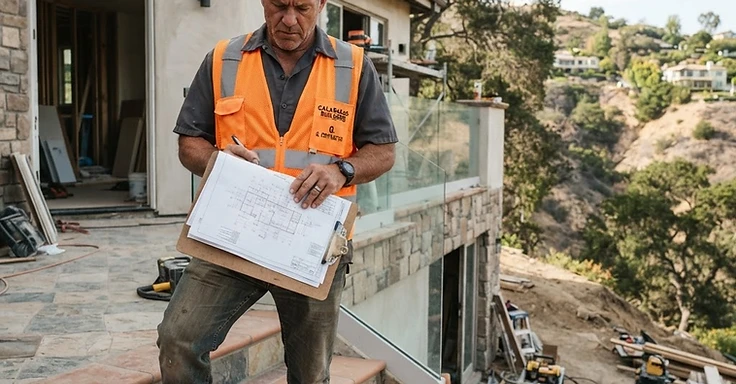
Calabasas homeowners deal with specific site realities like steep hillside lots, high fire-severity zones, and strict protections for mature oaks. Then you have the City of Calabasas review process, which hits harder than a standard city permit elsewhere. That makes picking the right general contractor as heavy a lift as any design or material choice you make.
We put this guide together to help you vet a general contractor for your Calabasas remodel, addition, or new build. We cover what to verify before signing, how local approvals usually shake out, and how we keep your project on a realistic schedule. We want you to judge us on our process and accountability, not just the bottom-line price, so you can feel good about your decision.
Key Takeaways
- California law says any job over $500 in total labor and materials needs a contractor licensed by the CSLB.
- You need a Class B General Building Contractor for work that touches two or more unrelated trades.
- State law limits your down payment. It can’t be more than 10% of the contract price or $1,000, whichever is less.
- Most residential work in Calabasas needs a permit. We always tell folks to check their contractor on the official CSLB website first.
- So, watch those hillside properties. They often sit in overlay zones where your structure height is capped at 25 feet.
Start by Defining the Scope Honestly
Get clear on what you actually need before you start comparing contractors. In Calabasas, your scope drives the whole job. It dictates your permits, your timeline, and which trades we need to coordinate. Vague scopes lead to vague bids. That is the fastest way to get hit with surprise costs once we open up your walls.
Common Project Scopes
- Interior remodel: Kitchens, bathrooms, and finishes inside your current footprint. These look straightforward, but we still have to plan carefully for electrical and plumbing upgrades.
- Room addition or second story: You are adding square footage here. This brings in foundation work, structural needs, and often hillside reviews. You need serious engineering and architectural oversight for these.
- Whole-home renovation: We are managing multiple trades over several months. You need a contractor who lives and breathes project management and scheduling.
- New construction or major rebuild: This is the full package. Think plan checks, grading, and inspections from the ground up. This is the most complex path, so your team better know the local zoning and environmental regs inside and out.
A dependable contractor will ask how you use your home, what your budget is, and what your timeline looks like before suggesting an approach. The right scope fixes your actual frustrations while keeping your lot and budget in mind. So, if a contractor tries to give you a price over the phone without seeing your plans or walking the site, walk away. They are missing the nuances of your property. We always prioritize seeing the site conditions first. Calabasas lots are tricky. Unique drainage, access, or soil conditions always impact your final cost.
Verify the License and Insurance First
In California, any job costing $500 or more in labor and materials needs a contractor licensed by the Contractors State License Board (CSLB). Before we start any work at your place in Calabasas, you need to confirm the basics. That license isn't just paper. It’s your main protection against hacks who might leave you high and dry if things go sideways.
Essential Verification Steps
- Active CSLB license: Check their license number and status on the CSLB site. Make sure the classification fits your project. A B-General Building license covers most full jobs, but a B-2 Residential Remodeling Contractor license is for specific upgrades.
- General liability insurance: Ask for a current certificate and double-check the coverage. It might not be a license requirement, but it keeps your property safe.
- Workers' compensation: We carry this if we have employees. It keeps you off the hook if a worker gets hurt on your job site.
- Bond: California contractors must have a bond. Make sure theirs is current and active.
A pro will hand this over without a second thought. But if someone gets cagey about showing you their papers, walk away. You should also look up their CSLB history for any complaints or disciplinary actions. A clean record tells you everything you need to know about how they do business.
Understand How Calabasas Approvals Work
Calabasas is its own city, so we send most permits through the City of Calabasas Building and Safety Division. Some surrounding unincorporated areas fall under the Los Angeles County Department of Public Works. We know exactly which authority covers your specific address.
Local Factors Affecting Review
- Hillside development: Sloped lots often trigger Planning Commission review, grading permits, and geotechnical reports. We need these reports to keep your structure safe on uneven ground.
- Very high fire hazard severity zones: Much of Calabasas requires ignition-resistant materials, ember-resistant venting, and defensible-space compliance. These are code requirements that dictate your material choices.
- Oak tree and native vegetation protections: If your project sits near protected oaks, you may need an oak tree permit and an arborist report. Calabasas is strict about their trees, and violating these rules brings heavy fines and stalls your project.
- Design and view considerations: Additions and second stories can face design review. So we make sure any new construction fits the neighborhood aesthetic.
A good contractor walks you through these rules. We handle the permit application and coordinate the inspections so you do not have to. We stay on top of the city's online portal and manage every bit of paperwork needed for a successful plan check.
Ask How They Coordinate Trades and Inspections
A mid-size Calabasas remodel juggles a lot. You have framing, plumbing, electrical, HVAC, and finish crews all needing space. The sequence is everything. If the order is off, your project stalls. Inspections happen at specific milestones to keep us moving. This is where we handle quality control. If a contractor gets shaky when you ask how they schedule these, they will likely struggle to keep your job on track.
Critical Inspection Milestones
- Foundation and grading inspection: We look at this closely on hillside lots to keep the structure solid.
- Rough inspection: This happens after framing, plumbing, and electrical work is done but before we hang drywall. It is your only chance to see what is hidden behind the walls.
- Fire and defensible-space compliance: If you are in a high fire-severity area, we have to prove we met the safety standards.
- Final inspection: This is the last check once everything works. It clears your permit with the city.
Ask who handles scheduling those visits. And ask what happens if an inspector finds a problem or issues a correction notice. A straight answer shows you how they run a site. We treat inspections as part of the job, not as a hurdle. A real pro keeps a schedule and makes sure every trade is ready for the inspector before they show up on your doorstep.
Read the Contract Before You Read the Price
You probably want to flip right to the final page to see the total number. Don't do that. That price only makes sense if the contract covers exactly what you think it does. Around Calabasas, where home values are high and site conditions get tricky, a vague contract is just a liability. We make sure our documents list every material, the labor involved, and how we handle issues on the job. California law lays out what belongs in these agreements, so use those rules to your benefit. For example, the Contractors State License Board says you should never pay more than 10 percent of the total cost or $1,000 as a down payment, whichever is less. If someone asks for $25,000 upfront on a $250,000 kitchen remodel, they are breaking the law. Walk away.
We always build a detailed payment schedule into our contracts. You should only pay for work as we finish it. So, you might pay after we pour the foundation, again after the framing passes inspection, and once more after we hang the drywall. This keeps our interests aligned with yours. And look for a clear change order process. Construction rarely goes exactly to plan once we open up walls in an older Calabasas home. Maybe you change a fixture or we find outdated wiring we couldn't see during the estimate. You need a written process for how that cost gets calculated and approved. Without a written change order, you might get a surprise bill at the end that breaks your budget. We also make sure the contract says who handles cleaning the site and hauling away debris. Trash and dump fees add up fast in Calabasas, and you don't want to get stuck with those costs unexpectedly.
Plan for a Realistic Schedule
Homeowners in Calabasas get frustrated when projects drag on. Maybe your neighbor finished a bathroom in three weeks, but a full addition or structural remodel is a different animal. We look at two distinct phases: pre-construction and the actual build. Pre-construction involves architects, engineers, and the City of Calabasas Planning Division. For a big addition or a new hillside build, you could spend three to six months just getting through plan check and city approvals. This isn't us being slow. It's just the local government review process. A realistic contractor tells you this upfront instead of promising a start date they can't hit.
Once we start swinging hammers, the schedule still depends on city inspectors and material lead times. Custom windows or imported tile can take twelve to sixteen weeks to arrive. If we don't order these early, the whole job stalls while we wait for deliveries. A typical kitchen and master suite remodel in Calabasas usually takes four to six months of active work. A whole-home renovation can easily take a year or more. And you need to build in a buffer for weather. Southern California is usually sunny, but heavy rain can halt grading and foundation work for weeks to keep the soil stable for a pour. Ask us for a schedule that shows milestones instead of exact dates. That gives us the flexibility we need when an inspection takes extra time or when a trade gets delayed at another site.
Navigating Hillside and Fire Hazard Regulations
Building in Calabasas means you are dealing with two main realities: steep slopes and high fire risk. We see the city enforcing some of the strictest rules in the state because so many homes sit in the Wildland Urban Interface. Check the CAL FIRE website to see if your property sits in a Very High Fire Hazard Severity Zone. If it does, we must follow Chapter 7A of the California Building Code. This code demands materials that resist ignition. You will need non-combustible siding, tempered glass windows, and specialized attic vents to keep embers from getting sucked into your home. These materials cost more than standard options. So, your planning range for an exterior remodel often runs 20 to 30 percent higher than it would in a flat, safe zone. We make sure these requirements are met so you do not fail your final inspection.
Hillside lots bring their own specific challenges. In Calabasas, you cannot just dig a hole and pour concrete. You will almost certainly need a geotechnical report from a soils engineer. This report tells the structural engineer how deep the piles need to go or what kind of retaining walls are necessary to keep the house from moving. The city will look closely at these plans to prevent mudslides and erosion. And you have to consider drainage. We must direct all water away from the slopes and into the street or a designated system. This often involves complex piping and pumps that add to your project cost. If a contractor treats a hillside build the same way they would a flat lot in the valley, they are not the right person for the job. You need us to manage the physical pressure that earth puts on a foundation and coordinate with the specialized crews that handle deep-foundation drilling.
How 1 Smart Build Can Help
1 Smart Build is a licensed design-build general contractor in Woodland Hills, CSLB #1076428. We work all over Los Angeles County. We handle everything from the initial design and permits to the structural framing and final finishes under one contract. So you only deal with one team. We stay accountable for your schedule and your budget. Call us at 1 (866) 419-8840. You can also run a free feasibility check on your property at /build-check to see exactly what your lot allows.
DISCUSS YOUR PROJECT WITH 1 SMART BUILD
Licensed, bonded and insured design-build general contractor serving Los Angeles County and Southern California. Tell us about your property and goals, and we'll walk you through feasibility, permitting and a clear plan.