Avoiding Occupancy Delays: The LA Fire Rebuild Utility Sequence
Learn how to coordinate LADBS final inspections with LADWP and SoCalGas to prevent your rebuilt Los Angeles home from sitting empty due to utility delays.

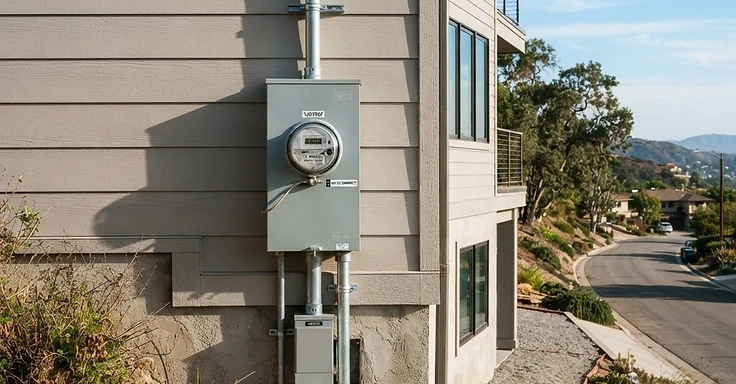
Rebuilding a home after a wildfire in Los Angeles is a complex journey that tests your patience and your planning skills. While much of the focus is on the structural framing and the finish materials, the most common cause of post-construction frustration is the final hand-off between the Los Angeles Department of Building and Safety (LADBS) and the utility providers. Many homeowners find themselves with a physically complete house that they cannot legally occupy because the utility meters are locked, removed, or not yet energized. This gap between the final building inspection and the utility turn-on can lead to months of unnecessary carrying costs and vacancy.
The key to avoiding this occupancy trap is understanding that utility reconnection is not an automatic byproduct of your final building permit sign-off. It is a separate, parallel process that requires specific documentation and timing. If you wait until the day of your final inspection to contact the Los Angeles Department of Water and Power (LADWP) or SoCalGas, you are already behind. This guide outlines the precise sequence you need to follow to ensure your home is habitable the moment your final permit is closed.
Key Takeaways
- You must initiate your LADWP service planning request at least 90 days before your anticipated final inspection to avoid meter installation delays.
- SoCalGas requires a certified pressure test on all new or repaired gas lines, and the test must be witnessed by an LADBS inspector before the gas meter can be set.
- The LADBS final inspection sign-off is the mandatory prerequisite for the LADWP to release the permit to energize for your electrical panel.
- Emergency inspection priority requests for fire-damaged properties can be filed through the LADBS wildfire recovery portal, but they do not bypass the requirement for a completed utility service application.
- A Certificate of Occupancy will not be issued by the city until all utility clearances are uploaded to the LADBS system, which typically takes 3 to 5 business days after the final utility inspection.
The Utility Reconnection Timeline
The biggest mistake homeowners make is treating utility reconnection as a final step. In reality, it is a project-long commitment. You should engage with the LADWP Unified Utilities Rebuild Operations Center (UUROC) as soon as your foundation is poured. This center is specifically designed to coordinate water and power restoration for fire-damaged properties. By establishing your account and service requirements early, you ensure that the utility infrastructure is ready to support your new home's electrical and water demands.
Your timeline should look like this:
- Month 3 of construction: Submit your service planning application to LADWP. This is when you confirm if your existing service lines are sufficient for your new home's load.
- Month 6 of construction: Schedule your rough-in inspections with LADBS. Ensure your electrical panel and gas piping are ready for the inspector to verify compliance with current codes.
- 30 days before completion: Confirm that your service planning file is marked as Ready for Meter in the LADWP system.
- Final Inspection Day: Once the LADBS inspector signs off on the final building permit, they will electronically notify the utility departments.
- Post-Inspection: Contact the utility providers to confirm they have received the electronic sign-off and schedule the physical meter installation or re-energization.
Proper planning during these phases prevents common bottlenecks. When you handle your documentation, keep copies of every submittal. If a question arises during the final city walkthrough, having your service planning approval letter readily available saves time. You should treat the utility coordination as a separate trade, similar to plumbing or electrical work, that requires its own schedule and milestone check-ins.
SoCalGas: Pressure Tests vs. System Inspections
Gas service is often the most misunderstood part of the reconnection process. If your home was destroyed, your gas service line was likely capped at the street or the property line. To get it turned back on, you need a valid pressure test. This is not just a simple check. It is a formal procedure where your licensed plumbing contractor pressurizes the entire gas system within the house to a specific PSI, usually 10 to 15 PSI, for a set duration, typically 15 to 30 minutes, to ensure there are no leaks.
The LADBS inspector must be present to witness this test. If the pressure drops, the test fails, and you must find the leak, repair it, and reschedule the inspection. Once the inspector signs off on the pressure test, they will issue a clearance. You must then provide this clearance to SoCalGas. Do not assume the city sends this automatically. Always request a copy of the signed inspection card or the digital clearance letter from your contractor to provide to the gas company directly.
This step is critical because gas providers adhere to strict safety protocols. They will not set a meter if there is any doubt about the integrity of the downstream piping. Ensure your contractor uses a gauge that is calibrated and visible to the inspector. Any ambiguity in the pressure reading can lead to a rejected inspection, which resets your timeline with the utility company.
The Occupancy Trap: Why Meters Get Locked
An occupancy trap occurs when the building is finished, but the utility company refuses to set the meter. This usually happens for one of three reasons: the electrical panel is not properly labeled, the gas pressure test clearance is missing, or the service planning application was never finalized. In some cases, the utility company may have removed the service lateral entirely during the fire cleanup, requiring a new service installation that can take weeks or months.
To avoid this, keep a utility clearance folder on-site. This should include your approved electrical load calculations, the signed-off gas pressure test report, and the LADWP service planning approval letter. If an inspector or a utility technician arrives and has a question, having these documents ready can prevent a red tag or a delayed meter set. If your meter was removed, you must specifically request a new service installation rather than a reconnection, as the administrative requirements differ.
Consider also that utility companies have different rules for main service panels. If your panel is outdated or does not meet current California electrical codes, the inspector will not authorize a reconnection until the entire service entrance is upgraded. Discuss this with your electrician during the framing stage so that you are not surprised when the final inspection is performed.
Budgeting for Utility Reconnection Fees
As of 2026, the City of Los Angeles has maintained processing for fire-rebuild projects. While standard permit fees apply, the city offers priority scheduling for inspections related to wildfire recovery. You can request this priority through the LADBS wildfire recovery portal. There is no additional fee for the priority status itself, but you must ensure your permit is correctly flagged as a Fire Rebuild in the system. If your permit is not correctly flagged, you will be stuck in the standard queue, which can add weeks to your timeline.
Utility reconnection fees vary based on the scope of work. If you are simply reconnecting an existing service, the costs are generally administrative. However, if you are upgrading your electrical service to accommodate new appliances or an ADU, you may face service extension fees. These can range from $2,000 to $10,000 depending on the distance from the transformer and the complexity of the trenching required. Always ask your contractor for a breakdown of these utility-specific costs during the planning phase. These costs are separate from your building permit fees and should be accounted for in your contingency budget.
Re-energizing Circuits and Final Habitation
Once the final permit is closed and the utility meters are set, you are not quite done. You must ensure that your electrical circuits are properly balanced and that all GFCI and AFCI breakers are functioning correctly. In many fire-rebuilds, the electrical system is brand new, but the transition from temporary construction power to permanent utility power can sometimes trip sensitive breakers. Have your electrician perform a load test on the day the power is turned on to ensure that your HVAC, kitchen appliances, and lighting systems are all drawing power correctly without overloading the main panel.
If you are moving into a home that was previously cleared for re-entry, ensure that your smoke and carbon monoxide detectors are hardwired and interconnected as required by the 2026 California Building Code. The final inspection will verify this, but it is a critical safety step for your own peace of mind. Taking the time to test these systems on move-in day confirms that your home is not just finished, but truly ready for your family.
If you have any questions about your specific rebuild project or need help navigating the LADBS and utility requirements, 1 Smart Build is here to assist. We specialize in the complexities of Los Angeles residential construction and can help you manage the entire process from permit to move-in. Call us at 1 (866) 419-8840 or visit our website at 1smart.build/build-check to discuss your project.
DISCUSS YOUR PROJECT WITH 1 SMART BUILD
Licensed, bonded and insured design-build general contractor serving Los Angeles County and Southern California. Tell us about your property and goals, and we'll walk you through feasibility, permitting and a clear plan.