The 2026 Los Angeles ADU and All-Electric Power Upgrade Guide
Planning an ADU or all-electric remodel in LA? Learn the 2026 realities of LADWP transformer fees, trenching costs, and service planning timelines to avoid budget surprises.
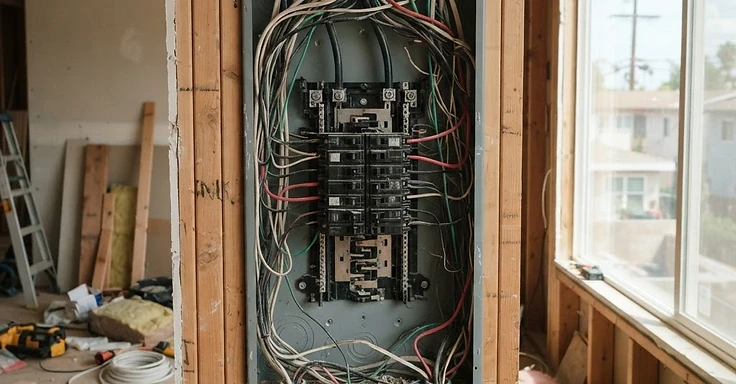
Planning an ADU or an all-electric remodel here in Los Angeles? You're probably sweating the floor plans and finishes. But we see the real headache for homeowners in 2026. It's not your design. It's the grid. We're all adding heat pumps, induction ranges, and EV chargers. That’s pushing neighborhood infrastructure to its limit. So, you might find your existing electrical service just can't handle the load. That’s when you get into a messy process with the Los Angeles Department of Water and Power.
Key Takeaways
- LADWP Service Planning typically requires 12 to 16 weeks for initial engineer assignment and an additional 8 to 12 weeks for field crew scheduling.
- Homeowners may face a transformer capacity fee ranging from $10,000 to $25,000 if their project load exceeds the existing neighborhood transformer capacity.
- Trenching costs for new underground service lines in Los Angeles generally range from $50 to $150 per linear foot, depending on surface restoration requirements and permit types.
- All-electric remodels often require a 400A service upgrade, which frequently triggers a mandatory review of the utility-side transformer capacity.
- LADBS building permits and LADWP electrical service permits are distinct processes that require separate point-of-connection approvals before work can commence.
You need to know the difference between your house-side panel and the utility-side transformer. Upgrading a panel is standard, but if your neighborhood transformer is maxed out, you end up dealing with LADWP Service Planning. So, you start hitting fees, engineering reviews, and infrastructure costs that can hit your budget hard. At 1 Smart Build, we see this all the time across the San Fernando Valley and the Westside. This guide covers the 2026 reality for your project.
Check out the official connection requirements at the LADWP homepage and look up building code standards at LADBS. The Contractors State License Board can also help you find pros who know how to handle this heavy-duty infrastructure work.
The 2026 Timeline Reality
The timeline is usually what drives homeowners crazy. You can't just slap in a new panel and assume the grid will handle it. If your load calculation is higher than your current service, you have to request help from the utility. As of August 2026, it takes about 12 to 16 weeks just to get a Service Planning engineer assigned. Then, after the design is approved and you have paid your fees, you wait another 8 to 12 weeks for a field crew to handle the transformer or line work. Build 5 to 7 months of lead time into your planning right now.
The Transformer Trap
Don't assume a 400A panel means you are done. If the transformer on your street is already maxed out, which is common in older neighborhoods, the utility will make you pay for a system upgrade. You should be ready for a $10,000 to $25,000 bill. That covers upgrading the neighborhood hardware to handle your power needs. Costs vary, but budget for it if you are adding major electrical demand in an older area.
Trenching and Permitting
If you need a new underground connection, you are on the hook for the trenching from your property line to the utility point. You will need an A-Permit or S-Permit from the Bureau of Engineering. And don't forget the cost to fix concrete or asphalt if you are cutting into a driveway or sidewalk. Talk to a licensed contractor about your site conditions before you lock in a budget.
The Technical Load Calculation
Get an accurate load calculation before you call the utility. Your contractor or engineer must add up everything in the house, including your new ADU needs. This tells us if your service is actually too small or if you can make your current setup work. We often use load-sharing devices for high-amperage EV chargers to help our clients avoid a full service upgrade. It is a smart way to save money.
Inspection Sequence
Once your design is ready and the utility gives the green light, follow the inspection sequence to the letter. You need a rough-in inspection from the Department of Building and Safety, then a final. Do not turn on any new panels until the utility has done their part. If you jump the gun, you will fail your inspections and lose weeks. Take your time.
Why 1 Smart Build?
Handling utility requirements alongside building codes is a headache. We specialize in design-build projects at 1 Smart Build that factor in these infrastructure realities from the start. We handle the permit process and coordinate with utility engineers so you stay on schedule. Give us a call at (866) 419-8840 if you want to get started.
DISCUSS YOUR PROJECT WITH 1 SMART BUILD
Licensed, bonded and insured design-build general contractor serving Los Angeles County and Southern California. Tell us about your property and goals, and we'll walk you through feasibility, permitting and a clear plan.