The 2026 Los Angeles Hillside Grading Guide: Avoiding Haul Route Headaches
Planning a hillside addition or pool in LA? Learn how to manage your dirt export to avoid mandatory public hearings and unexpected 2026 grading costs.
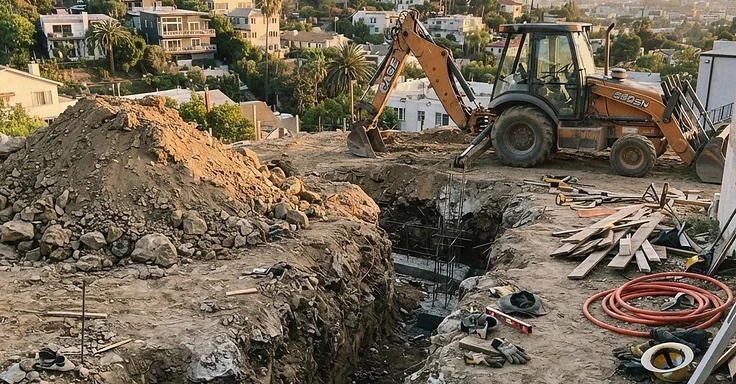
If you are planning a room addition, a new pool, or a custom home in the Los Angeles hills, you are likely focused on the design, the views, and the square footage. However, in the hillside neighborhoods of the Westside, San Fernando Valley, and beyond, the most critical factor in your project's success is often what happens beneath your feet. Specifically, how much dirt you move can dictate whether your project sails through the permit process or gets stuck in a mandatory public hearing.
Many homeowners are surprised to learn that the City of Los Angeles has a strict threshold for earth movement. If your project requires the export of more than 1,000 cubic yards of dirt, you trigger a Haul Route public hearing. This is not just a paperwork exercise. It involves neighborhood notifications, potential opposition, and significant delays. Understanding these rules in 2026 is essential for any homeowner looking to build in a hillside zone.
Key Takeaways
- Any project requiring the import or export of more than 1,000 cubic yards of earth in a designated Hillside Area triggers a mandatory Haul Route public hearing.
- LADBS grading plan check fees typically start at $1,200, while the Haul Route filing fee is $529 for the first 1,000 cubic yards, plus $100 for every additional 1,000 cubic yards.
- You must budget for a refundable Grading Bond, which generally ranges from $2,000 to $10,000 depending on the scope of work.
- Mandatory Haul Route monitors or flaggers can cost between $500 and $800 per day, a cost that adds up quickly during the excavation phase.
- The 1,000 cubic yard limit is cumulative, so if you phase your project, the city will count the total volume of all phases toward the threshold.
The 1,000 Cubic Yard Threshold
The 1,000 cubic yard limit is the magic number in Los Angeles. It is important to realize that this includes everything, such as the excavation for your foundation, the cavity for your new pool, and any over-excavation required by your geotechnical engineer for soil stability. If your total export exceeds this amount, you must apply for a Haul Route approval from the Board of Building and Safety Commissioners. You can find official guidance on these requirements at LADBS.
This process is designed to protect neighborhood streets from the wear and tear of heavy trucks. It requires you to submit a detailed plan showing the route your trucks will take, the hours of operation, and how you will manage traffic. Because this is a public process, neighbors within a 300-foot radius will be notified, and they have the right to voice concerns about noise, dust, and safety. If you are uncertain about your project's zoning status, check the City Planning Department website.
Why Over-Excavation Matters
Many homeowners forget that over-excavation counts toward the total. If your soils report requires you to remove 500 cubic yards of loose soil and replace it with compacted fill, that 500 cubic yards is part of your total. If you are also digging a pool that requires 600 cubic yards of export, you are already at 1,100 cubic yards. You have crossed the threshold, and you are now in the territory of a public hearing.
2026 Costs and Financial Obligations
Budgeting for a hillside project requires accounting for more than just construction labor and materials. The soft costs associated with grading can be substantial. Beyond the basic permit fees, you need to prepare for the following:
- Grading Plan Check Fees: These start around $1,200 and scale based on the volume of earth moved.
- Haul Route Filing Fees: $529 for the first 1,000 cubic yards, plus $100 for each additional 1,000 cubic yards.
- Environmental Notice Fees: Expect to pay approximately $400 for the mandatory public notice process.
- Grading Bonds: These are refundable deposits held by the city to ensure you repair any damage to public streets. Budget $2,000 to $10,000.
- Traffic Control: Mandatory flaggers or monitors cost $500 to $800 per day.
For a typical hillside project, the all-in cost of export, including trucking, disposal fees at disposal facilities, and traffic control, generally ranges from $35 to $80 per cubic yard. If your site has difficult access that requires smaller trucks or specialized equipment, these costs can climb even higher. It is wise to maintain a contingency fund for these logistical hurdles.
Navigating the Baseline Hillside Ordinance
The Baseline Hillside Ordinance (BHO) is the regulatory framework that governs development in LA's sloped neighborhoods. It is distinct from the engineering-level grading permit. The BHO sets limits on Residential Floor Area (RFA) and grading quantities based on your lot size and slope. Before you finalize your design, you must verify your lot's specific BHO limits. You can review current ordinances and updates on the California Department of Housing and Community Development portal.
Cumulative Yardage Warning
A common mistake is attempting to bypass the Haul Route process by splitting a project into phases. The city tracks cumulative yardage. If you apply for a permit for a room addition today and a pool next year, the city will look at the total impact on the site. If the combined total exceeds 1,000 cubic yards, you will be required to go through the Haul Route process retroactively or for the second phase, which can lead to significant project delays.
The Inspection Sequence
Once your grading permit is issued, your project will move through a series of mandatory inspections. Do not proceed to the next stage until you have received the green light from the city inspector. Typically, this sequence begins with a site inspection to verify the erosion control measures, such as silt fences and straw wattles, are properly installed. You cannot start moving dirt until these are in place.
Next, the city will require inspections during the actual grading process. This ensures that the cuts and fills are being executed according to the approved engineering plans. Your geotechnical engineer will also be on-site to verify soil density tests. If the compaction does not meet the specified levels, you will be required to re-work the area. Keeping detailed logs of these inspections is a standard best practice to prevent headaches when you apply for your final certificate of occupancy.
Managing Your Timeline
Planning for a hillside project requires patience. From the moment you submit your initial grading plans to the time you break ground, you should anticipate a timeline of several months, especially if a Haul Route hearing is involved. The public notification process alone requires 30 to 60 days in many cases. If you add in the plan check cycles for the department of building and safety, your total pre-construction timeline could easily stretch to six months or more.
It is helpful to start the soil testing process early. If your soil report indicates that you need to import or export significantly more material than originally anticipated, you can adjust your design before you have submitted your final drawings to the city. This simple shift in timing can save you thousands of dollars in revisions and permit re-filing fees. Always consult with a licensed contractor who is experienced in hillside work to review your site conditions before you commit to a specific architectural design.
Steps for a Successful Grading Project
To keep your project on track, follow these steps:
- Geotechnical Early Engagement: Hire a geotechnical engineer before you finalize your architectural plans. They will tell you exactly how much over-excavation is required.
- Accurate Volume Calculations: Have your civil engineer calculate the exact cubic yardage of your cut and fill. Do not guess.
- Neighborhood Outreach: If you know you will exceed 1,000 cubic yards, start talking to your neighbors early. Transparency often prevents formal opposition during the public hearing process.
- Budget for Soft Costs: Include the $5,000 to $15,000 in potential soft costs (bonds, fees, monitors) in your initial project budget.
For more information on the technical requirements for grading, you can visit the LADBS Grading Permits page.
Work With 1 Smart Build
Navigating the complexities of hillside construction in Los Angeles requires a partner who understands both the engineering requirements and the city's regulatory landscape. At 1 Smart Build, we handle design-build projects that respect the unique challenges of LA's hillside terrain. From initial geotechnical coordination to managing the Haul Route process, we make sure your project is built to code and within your budget.
If you are ready to start your project, we are here to help. You can reach us at 1 (866) 419-8840 or visit our website to schedule a consultation. Let us help you navigate the process and build your vision safely and efficiently.
DISCUSS YOUR PROJECT WITH 1 SMART BUILD
Licensed, bonded and insured design-build general contractor serving Los Angeles County and Southern California. Tell us about your property and goals, and we'll walk you through feasibility, permitting and a clear plan.