The Hidden Costs of a 2026 Los Angeles Room Addition: Panels, Batteries, and Permits
Planning a room addition in Los Angeles in 2026? Discover how the new Title 24 energy mandates, battery storage requirements, and electrical panel upgrades impact your budget.
Budgeting for Your LA Addition in 2026
Planning an expansion in the San Fernando Valley or the Westside means you’re probably itching to start picking out floor plans for that new master suite or sun-drenched family room. But hold on. As of 2026, the biggest budget shock for us in Los Angeles isn't the price of lumber or high-end tile. It’s the mandatory energy infrastructure we have to install just to pass a Los Angeles Department of Building and Safety plan check.
The 2025 Title 24 Energy Code hit the books on January 1, 2026. It completely changed how we estimate a room addition cost. Forget about simple price per square foot math. We now have to factor in a heavy-duty energy backbone, including high-capacity electrical panels and Battery Energy Storage Systems. So, if you’re rebuilding after a fire or just punching out a bedroom, these code requirements are going to hit your wallet.
Key Takeaways
- The 2025 Title 24 Energy Code applies to all permit applications submitted on or after January 1, 2026.
- New residential additions often require a battery system. Expect hardware costs between $10,000 and $15,000.
- Upgrading your electrical panel from 100A to 200A will run you $3,500 to $6,500 around Los Angeles.
- So, plan for LADWP meter spot inspections. They take 4 to 8 weeks to schedule before we can even touch the electrical work.
- The Los Angeles Green Building Code makes us install a dedicated 240V/50A circuit for EV charging. Budget an extra $800 to $1,500 for that.
The 2026 Title 24 Battery Mandate
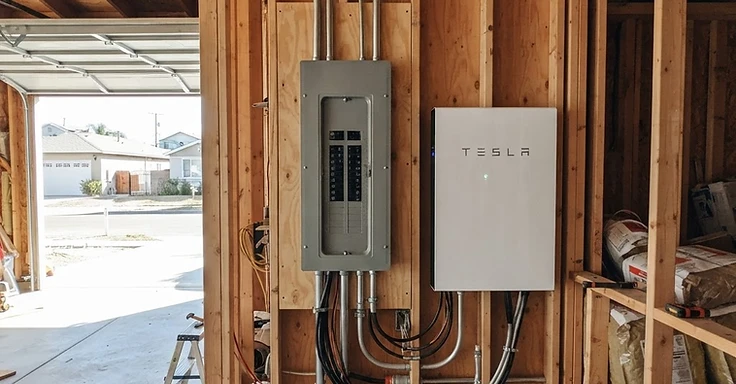
The biggest change in the 2026 code cycle is the mandatory battery storage requirement. If you are doing new construction or certain large additions, you now have to include a battery system alongside your solar setup. We are looking at a code requirement of 5 kWh of storage for every 1 kW of solar. So, for a typical addition that triggers these rules, expect hardware costs between $10,000 and $15,000.
This isn't an optional upgrade. If your addition is big enough to force new solar panels under Title 24, the battery comes with the deal. It keeps the energy your home makes during the day ready for you at night, which puts less stress on the grid. But it does add an upfront hit to your construction budget that wasn't there a few years ago. We have to make sure your setup meets the Building Energy Efficiency Standards when we work out your home's total energy budget.
Compliance and Safety
- You need non-combustible wall surfaces behind those battery systems.
- Clearance is strict. We need 5 feet of horizontal space from the edge of the storage unit.
- Your city inspector has to verify the whole install to make sure it hits every fire safety code.
Upgrading Your Electrical Panel: 200A vs 400A
Loads of older homes in spots like Van Nuys or Mar Vista are still stuck on 100-amp or 125-amp panels. Honestly, that doesn't cut it in 2026. Between your new battery storage, those mandatory EV-ready circuits, and the shift toward all-electric appliances, we usually have to upgrade your panel during an addition. We see a lot of homeowners opting for 200-amp or even 400-amp service to handle the extra draw.
Swapping a panel isn't just about pulling out the old box and hanging a new one. We have to coordinate with the utility company to make sure the service drop coming from the street can handle the jump in power. If you're planning a big addition, keep these numbers in your budget:
- 100A to 200A Panel Swap: $3,500 to $6,500. This covers the new panel, breakers, and our labor.
- 400A Service Upgrade: $8,000 to $13,000. You'll likely need this if you're running two EVs, a pool, and a hefty battery system.
- LADWP Application Fee: $170. This is the first step for any service change.
- LADWP Service Point Fees: $2,000 to $5,000. These costs depend on whether LADWP needs to pull new lines from the street or if we have to dig a new trench for you.
LADWP Bottlenecks and Timelines
The toughest part of the job in 2026 is dealing with utility coordination. We cannot pull a permit for your electrical work until we get a meter spot from LADWP. A city inspector has to come out to your house and mark exactly where that new meter goes. This inspection alone takes 4 to 8 weeks. And once we finish the install, the disconnect and reconnect process tacks on even more time.
So the city rolled out a 15-business-day completeness check for energy sub-permits this year. It forces the building department to review your solar and battery plans within three weeks of us submitting them. That keeps your paperwork moving, but it doesn't help with the actual utility work out in the street. You need to build these delays into your schedule from day one. Do not let your job site sit idle while you wait for the utility company to flip the switch.
Tips for Managing Utility Delays
- Submit your LADWP service request the second your architectural plans are locked in.
- Clear out any junk or debris so the inspector can walk right up and finish the meter spot.
- Work with a contractor who knows the LADWP construction services department inside and out.
EV-Ready Requirements and Infrastructure
You might not own an electric car right now, but the Los Angeles Green Building Code says your addition has to be ready for one. We need to run a dedicated 240V/50A circuit to your garage or parking spot. Budget between $800 and $1,500 for this work. That price swings based on the distance from your main panel to where you park. This code is here so you won't have to tear your home apart later just to charge a car.
So, if we are building you a new garage or carport, think about adding a subpanel for a future charger. It’s smart money. Since the walls are already open, we can run the conduit and wiring easily. But wait until the drywall is up and it becomes a headache. At 1 Smart Build, we build this into our process. We keep your home ready for what is next without wasting your time or money.
Behind-the-Meter vs. Line-Side Taps
Adding solar and battery storage to your place means we have to decide how to tie it into your existing electrical gear. We generally have two ways to do this: a behind-the-meter connection or a line-side tap. Picking the right one might save you thousands on panel upgrades. Either way, we have to follow the safety standards from the Los Angeles Department of Building and Safety.
We use a behind-the-meter connection most of the time. We tie your solar and batteries right into your main breaker panel. It is a straightforward setup, but it often forces us to upgrade your panel. If you have an old 100-amp panel, adding a big solar array and battery storage might push it past the busbar rating. So, we have to swap it out for a 200-amp or 400-amp panel to meet National Electrical Code safety rules.
But a line-side tap is different. We connect your solar and batteries straight to the utility service conductors, tucked between your meter and your main breaker panel. Because this happens before the power hits your main breakers, it does not count against your panel's load limit. It is a smart way to skip a full panel swap if your service is still good. But line-side taps need specific sign-off from LADWP. You need a highly skilled electrician for this. Not every home can take one. The utility company will look at the job closely to make sure the tap stays clear of the meter and service entrance gear. Talk to us about both options early in the design phase so we can figure out what works for your electrical setup.
Solar PV and Energy Storage Integration
Pairing solar with battery storage isn't just about cutting your monthly bill. Under the 2026 energy code, it’s a standard part of how we design your home. We want a system that balances what you produce with what you actually use. When we put solar panels on your roof, we're building you a miniature power plant. Think of the battery as your reservoir. It holds onto that juice for when the sun sets or the grid hits a peak demand.
For a typical Los Angeles room addition, we have to size the system to hit the Building Energy Efficiency Standards. We’ll perform a load calculation to see exactly what that new space will eat up in power. If you’re adding a big master suite with high-efficiency HVAC, LEDs, and smart appliances, your solar and battery setup has to handle that draw. The integration process relies on smart inverters talking to your energy management system. These inverters make sure the battery charges when production is high and kicks in power when you need it most.
You also have to think about where this gear actually goes. Batteries are heavy. They need specific clearances from windows, doors, and anything flammable. Finding a spot for a battery bank in a dense city like Los Angeles is often a challenge. We might tuck it in your garage or put it on an exterior wall that meets fire codes. Proper ventilation matters, too, because these units get hot. So, we map out the location of your battery and inverter during the initial design phase to save you from paying for changes once we break ground.
Current Construction Trends in Los Angeles
Here in LA, we're seeing a shift toward intentional, high-performance additions. You're likely moving past the idea of just adding square footage. Instead, you're looking at how your home performs for the long haul. We're busy helping families expand their current homes rather than packing up and moving. High interest rates are a big factor, and you want to hang onto the equity you’ve already built.
We’re also tackling more all-electric projects. The city wants cleaner energy, so many of you are pulling out your old gas lines. We swap your gas furnace for a heat pump, your stove for an induction cooktop, and your water heater for a heat pump unit. It takes a solid upfront investment to beef up your electrical panel, but it protects your budget from future gas price hikes. And because of current energy codes, many of these electrical upgrades are now mandatory for new additions anyway.
You also want more control over your power. That’s why we’re installing more smart tech to track your energy usage. You need to see exactly what your solar panels produce and what your batteries hold. These apps give you real-time data, and they’re becoming a standard spec for us. You can check your phone to decide when to run the dishwasher or the dryer so you’re using that solar power when it’s peaking. It’s about being smart with your energy management to get the best return on your solar and battery investment.
How 1 Smart Build Can Help
Managing a room addition in Los Angeles is a complex task that involves coordinating with architects, engineers, utility companies, and city inspectors. At 1 Smart Build, we specialize in navigating these challenges so you do not have to. We understand the nuances of the 2026 Title 24 energy code and how to design a project that meets all requirements without breaking your budget. Whether you are planning a simple bedroom addition or a major home expansion, we provide a clear, transparent process from start to finish.
We start by assessing your current electrical service and energy needs. We then design a plan that integrates your solar and battery requirements into the overall architecture of your home. Our team handles all the paperwork, including the LADWP service requests and the building permit applications, ensuring that your project stays on schedule. We believe that a successful project is built on clear communication and thorough planning. By identifying potential bottlenecks, such as utility delays or code compliance issues, before we break ground, we keep your project moving forward.
If you are ready to start your project, we are here to help. You can visit our website at /build-check to see if your property is ready for an addition or to schedule a consultation. We will walk you through the planning ranges for your project and help you understand the specific requirements for your neighborhood. Do not let the complexity of the 2026 energy code stop you from creating the home you want. Call us today at 1 (866) 419-8840 to discuss your vision and let us handle the heavy lifting of your Los Angeles room addition.
DISCUSS YOUR PROJECT WITH 1 SMART BUILD
Licensed, bonded and insured design-build general contractor serving Los Angeles County and Southern California. Tell us about your property and goals, and we'll walk you through feasibility, permitting and a clear plan.