Is an SB9 Lot Split Right for Your Los Angeles Property?
Considering an SB9 lot split in Los Angeles? Learn the requirements, costs, and process for dividing your single-family property with this expert guide.
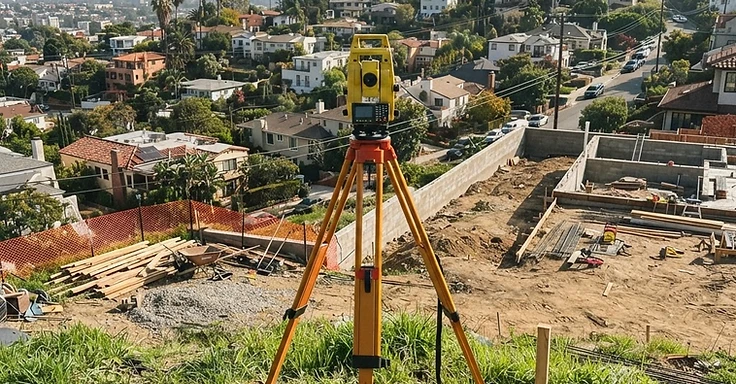
You might be sitting on more potential than you realize if you own a single-family home here in LA. California Senate Bill 9 (SB9) is a solid tool for managing your property value while the housing shortage drags on. We talk to clients from the San Fernando Valley to the Westside every day who want to know if they can divide their land. An SB9 lot split is a legal process where you take one eligible single-family parcel and turn it into two separate legal lots.
SB9 forces local agencies to permit these urban lot splits on eligible properties. So, it is not like a standard subdivision. A standard split drags on for months, but an SB9 split is a ministerial process. That means if your project hits the objective requirements, the city has to approve it. And once that split is done, you have two independent lots. You decide whether to build on the new one, sell it, or just hang onto it for later.
Key Takeaways
- Each new lot you create under an SB9 split needs to be at least 1,200 square feet.
- You have to keep the two resulting lots pretty much equal. Neither one can dip below 40% of the original parcel size.
- Building new on these lots? Plan on keeping side and rear yard setbacks at 4 feet minimum.
- The whole process usually takes 3 to 9 months. It just depends on your specific city and how tricky the site gets.
- Set aside a budget between $15,000 and $100,000. That covers your professional fees, land surveys, and the city application costs.
What is an SB9 Lot Split?
Senate Bill 9, or the HOME Act, passed to boost housing supply across California. For you in Los Angeles, it sets up a clear, ministerial path to split a single-family lot. Ministerial means that if your plans hit every target the city and state set, they cannot deny you. They can't block your permit just because a neighbor doesn't like the look of it. This takes a lot of the headache out of the process.
We help you turn one parcel into two. Each new lot stands on its own. You can sell one off, build a new home, or just hold onto it as an asset. But keep in mind, this law only covers urban lot splits. It doesn't work for rural land or spots that don't fit the state's definition of an urbanized area. Because we follow California Government Code Section 66411.7, you get a set of rules the city has to play by. So, while the Los Angeles Department of City Planning handles the forms and local ordinances, they still have to follow the state framework.
Does Your Property Qualify?
Not every lot is cut out for an SB9 split. We start with zoning. Your land has to be zoned for single-family residential. If you are in a multi-family, commercial, or industrial zone, SB9 just doesn't apply. And your property needs to sit inside an urban cluster or urbanized area per the U.S. Census Bureau. Go ahead and check your zoning status on the Los Angeles City Planning SB9 portal.
But you have to look for these specific red flags before we get moving:
- Environmental Constraints: If your property is in a wetland, on prime farmland, or sits in a high fire hazard zone, you might be out of luck.
- Historic Districts: We see a lot of headaches if your home is a designated historic landmark or tucked inside a historic preservation overlay zone.
- Prior Splits: You can't use SB9 if someone already split this parcel using the same law.
- Adjacent Ownership: You or your partners can't have subdivided an adjacent lot with SB9 already.
We always suggest a property-specific feasibility study. So we check your deed, pull local maps, and make sure there are no hidden legal restrictions stopping us from dividing your land.
The Process and Timeline
We start with a feasibility study to make sure your lot fits state and local rules. It takes more than just sketching a line on a map. You need a formal parcel map put together by a licensed land surveyor or a registered civil engineer to keep the city happy.
Here is how the work usually breaks down:
- Surveying: A licensed surveyor handles the boundary and topographic work so we have exact new lot lines.
- Planning and Engineering: We draft the tentative parcel map, noting where the division goes, how the drainage flows, and what the utility assessments look like.
- Application: We get the paperwork ready, including your affidavits and that tentative map, and file it with the local planning department.
- Approval and Recording: So, once the city signs off on the tentative map, we head into the final map stage. We track down signatures from county officials and record your final map with the county recorder.
Expect this to take anywhere from 3 to 9 months. But, we hit delays if the city forces revisions to the map or if utility agencies push back for more info on your sewer or water connections.
What Drives the Cost?
You need a realistic budget for an SB9 lot split. Costs change based on your property size and location, so plan for $15,000 to $100,000 to get it done. This covers surveyors, civil engineers, architects, plus city permit and filing fees. Just keep in mind that splitting the lot isn't the same thing as building on it.
Splitting your lot is purely a legal and administrative hurdle. We see the costs breakdown like this:
- Surveying Fees: Land surveyors bill based on how messy your terrain is and how much acreage we are dealing with.
- Engineering Costs: You have to pay for civil engineering to draft up your grading, drainage, and utility plans.
- City Fees: The City of Los Angeles collects fixed filing fees for ministerial reviews and parcel maps.
- Consultant Fees: If you hire a firm like 1 Smart Build, these fees pay us to wrangle the experts and handle the city paperwork for you.
Remember, this price tag only covers making the new lot legal. Building a house on that dirt is a totally separate project. That construction will have its own budget, separate permit and impact fees, and physical building costs.
Navigating Los Angeles Zoning and Safety Standards
Zoning is more than a label. It is a set of rules the city enforces strictly. You might be in a standard R1 zone, but you still have to deal with the Very High Fire Hazard Severity Zone maps. If your property falls in one of these, the city will demand specific fire-resistant materials. They might even make you upgrade water lines for fire hydrants. The California Department of Housing and Community Development sets the baseline, but the city adds its own layers. You need to make sure your new lot lines don't create a non-conforming situation for your existing home. Say you split the lot and the original house sits too close to the new boundary. You will have to modify the old house or move that line. The 4-foot setback is a state standard. But Los Angeles is picky about how you measure those distances from chimneys or roof eaves. And watch out for Hillside Area rules. If your property has a significant slope, prepare for higher costs on geological surveys and structural engineering. The city won't let you split a vertical cliff without proof that it is safe to build on. So, this is where most homeowners get stuck. They see the law allows a split, but they don't realize the safety standards might make it impossible to build on the new parcel later. These safety standards are non-negotiable. You need a real handle on the local building code. You don't want to get halfway through and find out a seismic requirement or a hidden easement kills your project. Check those local zoning overlays early.
Utility and Infrastructure Requirements
Every new lot needs its own independent hookups to city services. We can't just run a hose from the main house to the new one. You need a new water meter, a new electrical panel, and a separate sewer lateral. The LADWP will handle most of this. And it isn't cheap. Budget between $20,000 and $50,000 for these hookups depending on how far the mains sit from your property line. But if the city sewer line is on the far side of the street, you're paying for trenching and repaving the public road. That gets expensive fast. You also need to check the LADBS permit requirements for all of this work. The Bureau of Engineering expects a plan showing how stormwater drains off the new lot. We can't just dump runoff onto your neighbor's property. So, we might need to install dry wells or catchment systems. If your street lacks a curb or sidewalk, the city might force you to install them as a condition of the split. These infrastructure needs catch many homeowners off guard. We aren't just moving dirt here. We are building mini-neighborhood infrastructure. It takes real coordination between city agencies that rarely talk to one another. This stage requires technical plans stamped by a licensed engineer. If your utility plan fails to meet current capacity standards for the street, you could face even higher costs for upgrades that benefit the whole block. Have these items mapped out before you finalize your budget.
Why Homeowners Choose This Path
Why do folks in Echo Park or Northridge mess with this? It comes down to flexibility and building equity. In our LA market, land is the real gold. By splitting your lot, we’re helping you create value out of thin air. Some homeowners do it to put up a second house for aging parents or adult kids priced out of the market. Others just want the financial gain. You could sell that new lot to a builder and pay off your current mortgage. Or, maybe you want a small rental to bring in monthly cash. And because we use the SB9 framework, you don’t have to fight off neighbors who usually try to stall these jobs. The state law has your back. So, you get to tap into high housing demand without the stress of a massive commercial project. You’re grabbing the reins on your property’s future. It’s a smart way to mix up your assets. Instead of a massive lawn to mow, you get two separate pieces of dirt that you can manage, sell, or pass down to your kids one by one. In spots like Sherman Oaks or the Westside, the price of that new lot often dwarfs what you spend on the split itself. We see it as a pro move for any homeowner looking to get the most out of what they already own.
How 1 Smart Build Can Help
You shouldn't go through this alone. Make sure whoever you hire holds a license from the Contractors State License Board. At 1 Smart Build, we handle the heavy lifting. We don't just hand you a set of drawings and walk away. We coordinate with surveyors to confirm your lot lines are legal. And we work with civil engineers to sort out drainage and utility problems that the LADBS and the Bureau of Engineering will definitely flag. We know how city planning departments operate and exactly what they expect to see on an SB9 application. This prevents you from losing months to corrections caused by a simple form mistake or a missing easement on a map. We manage the back-and-forth with the city, which is usually the most frustrating part of the job. But we also look at your long-term goals. If you plan to build later, we design the split to maximize the buildable area for that future structure. We make sure your new lot is legal, functional, and valuable. By acting as your single point of contact, we keep things moving so you don't get stuck in the bureaucracy. Our team knows the rules for the San Fernando Valley and central Los Angeles, so we aren't guessing. We give you clear feedback during planning, so you always know where your project stands.
Final Steps to Your Lot Split
Ready to start? You need a crew that knows LA property law inside and out. An SB9 lot split is a heavy lift. It isn't simple. 1 Smart Build handles the hurdles for you, from that first feasibility check to recording your new parcel map. We know these neighborhoods. We work from the Studio City hills to the streets of Torrance. We know the actual costs and the real timelines because we do this work every single day. Don't let your extra land sit empty just because the city paperwork looks like a headache. We'll find the best path for your property. Want to know what your home can really do? Get in touch. Call 1 Smart Build at 1 (866) 419-8840. We can discuss your goals and lay out the planning ranges for your site. So check out our build-check page to drop in your details. We'll look at your site info and show you exactly what the city demands before you spend a cent on construction. And let's get your project moving.
DISCUSS YOUR PROJECT WITH 1 SMART BUILD
Licensed, bonded and insured design-build general contractor serving Los Angeles County and Southern California. Tell us about your property and goals, and we'll walk you through feasibility, permitting and a clear plan.