Smart Home Remodeling in Los Angeles: How to Plan It Right
Planning a smart home remodel in Los Angeles requires more than just buying gadgets. Learn how to wire your home during construction, navigate Title 24 energy codes, and ensure your network backbone is ready for the future.
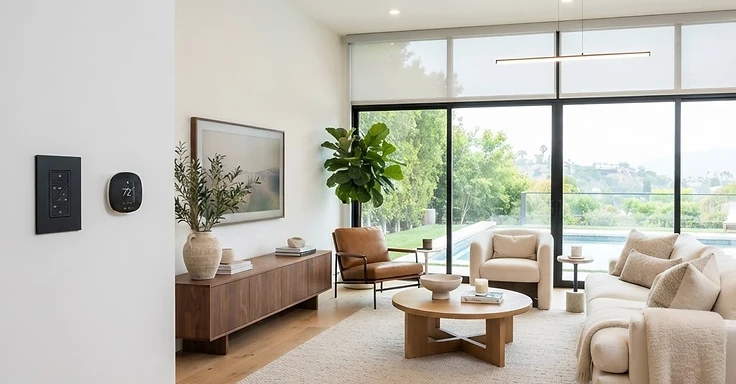
LA homeowners want a house that works smarter. Think lighting that adjusts itself, shades that drop when the afternoon heat hits, a front door you can check from your phone, and a network that doesn't drop. We find the best time to install this is during a remodel, while the walls are open and the wiring is exposed. So, smart home remodeling in Los Angeles is easiest, cheapest, and cleanest when we plan it alongside your framing instead of bolting it on later.
This guide shows you how to plan a smart home remodel the right way. We cover what to wire for before the drywall goes up, how California energy code and LA permits impact your work, and which systems are actually worth your money. We also help you pick a contractor who can coordinate the whole mess. Our goal is a home that feels simple for years, not a drawer full of gadgets that never talk to each other. But if you are in Woodland Hills, Beverly Hills, or Silver Lake, the principles of a solid tech foundation stay the same.
Key Takeaways
- The Los Angeles Department of Building and Safety (LADBS) requires an electrical permit for any new circuits or the installation of permanently connected smart home equipment.
- California Title 24 energy standards require high-efficacy lighting and specific dimming controls in all habitable rooms of a residential remodel.
- Category 6 (Cat6) or Cat6a ethernet cabling is required to support data transfer speeds up to 10 Gigabits per second for modern home networks.
- Smart switches and dimmers typically require a neutral wire at the switch box, a feature often missing in Los Angeles homes built before 1980.
- A standard 200-amp electrical panel upgrade is often necessary to support the combined load of smart home systems, EV chargers, and electric HVAC units.
Plan the Infrastructure Before the Drywall
The single biggest mistake we see in smart home projects is treating tech like an afterthought. Once the drywall is up, adding wire means cutting into finished walls. Then you have to patch and paint. That gets expensive and messy fast. During a remodel, the framing is open. Pulling cable is quick and cheap. You need to treat your tech plan with the same care as your plumbing or electrical layout. Figure out where every screen, speaker, and sensor goes before that first sheet of drywall hits the studs.
Walk your home before demolition starts. Decide exactly where you want your gear. We suggest running wired network access points for solid Wi-Fi in every room. Plan for lighting controls at entries and main living areas, and security cameras at key spots. Don't forget in-ceiling or in-wall speakers for audio and motorized shades on those west-facing windows. You might not buy the devices today. But running the wire and conduit now makes future upgrades painless. That is a must for spots like the kitchen or home office where you need a rock-solid connection.
The Power of Conduit
One of the smartest moves you can make is installing ENT, what we call smurf tube, in key spots. This flexible pipe lets us pull new wire through your walls years from now without touching the drywall. We run conduit from your equipment closet to the main TV, the home office, and the attic. Technology shifts from Cat6 to fiber optics or whatever comes next. When it does, you will be ready. It costs a little for materials during a remodel, but it saves you thousands in labor later.
Planning for Specific Rooms
- Kitchen: Plan for under-cabinet lighting controllers and voice-assistant hubs so your counters stay clear.
- Home Office: Run dual ethernet ports to your desk. That keeps your video calls from dropping when the Wi-Fi gets busy.
- Outdoor Living: Pre-wire for weather-resistant speakers and high-output Wi-Fi access points. You will want that coverage for the backyard or pool area.
- Garage: Add a data drop for your smart garage door opener and a dedicated circuit for a future EV charger.
The Network Backbone: Hardwiring for Reliability
Every solid smart home needs a reliable network backbone. Sure, wireless gear is easy, but the systems you actually depend on, cameras, streaming media, video calls, and control hubs, run way better on hardwired lines. Here in Los Angeles, you have got radio frequency interference from your neighbors everywhere. Relying only on Wi-Fi will just drive you crazy. A hardwired connection gives your data its own lane, clear of all that congestion from the dozen routers next door.
Get your contractor to run structured wiring back to one central spot during the remodel. We usually pick a small equipment closet or a recessed media panel tucked away in a laundry room or garage. We recommend sticking with Category 6 (Cat6) or Cat6a cabling. Cat5e used to be the go-to, but Cat6a handles way more bandwidth. It is built to keep up with the 4K and 8K streaming we are seeing more of now. Run this wiring to every stationary device, like your smart TVs, gaming consoles, and desktops.
Distributed Wi-Fi Access Points
Stop trying to blast a single router through thick plaster walls. A smart remodel uses multiple wired Access Points (APs) spread across the house. We mount these on the ceiling so they look just like smoke detectors. Since they all hardwire back to the main switch, you get a solid, fast signal in every corner. And that is the only way to make sure your front gate smart lock and the back bedroom thermostat actually stay online.
Network Security and Storage
- Centralized Rack: Keep your modem, router, and network switches in one ventilated spot so nothing overheats.
- PoE (Power over Ethernet): Use PoE switches to power security cameras and Wi-Fi access points right through the data cable, so you do not have to mess with extra power outlets.
- Network Isolation: Set up a separate guest network and a dedicated IoT network. This keeps your private data away from those smart gadgets.
- Backup Power: Put a small Uninterruptible Power Supply (UPS) in the closet. It keeps your internet running during those quick Los Angeles power flickers.
Smart Lighting and California Title 24 Compliance
Smart lighting is what you'll actually notice every single day. You can set scenes for mornings, evenings, or when you're away, and dimming saves you money. But here in California, you've got to deal with the energy code. Per the California Energy Commission Title 24 standards, most rooms need high-efficiency lighting and dimmers you can easily reach. So, installing a smart system usually helps you hit those code requirements rather than working against them.
Older homes around LA often have one real headache: the neutral wire. Most smart switches need one to stay powered when the lights are off. If your place was built before the 1980s, you probably don't have that wire at the switch box. We can pull those neutrals easily while your walls are already open during a remodel. If you wait until we've closed the drywall, you'll be stuck with pricey, battery-powered options that just don't work as well.
Automated Scenes and Sensors
Title 24 also pushes for occupancy and vacancy sensors in spots like bathrooms and laundry rooms. We can set up a system that does more than just flick power on or off. A bathroom sensor can trigger a soft light at night so you aren't blinded, then jump to full brightness during the day. That customization is what makes a home feel smart instead of just automated.
Lighting Specifics for LA Homes
- JA8 Compliance: Use JA8-certified bulbs and fixtures to meet current California energy standards.
- Exterior Lighting: Use smart timers or astronomical clocks that track sunset and sunrise, keeping your property secure.
- Keypad Controls: Clean up a bank of five messy switches by installing one elegant keypad for all your lighting zones.
- Circadian Lighting: Program lights to shift color temperature as the day moves on, mimicking natural sunlight to help with your mood and sleep.
Electrical Capacity and Panel Upgrades
Smart gear adds load and extra low-voltage runs to your house. We need to check if your main panel can take the hit. Lots of older homes in Van Nuys or North Hollywood are stuck with 60-amp or 100-amp panels. Those won't cut it for a modern setup with a high-end home theater, multiple climate zones, and an electric vehicle charger. We usually upgrade these to 200 amps during a smart remodel to give you the headroom your tech needs.
The LADBS Electrical Permits process keeps your new panel and circuits up to the current California Electrical Code. This means installing AFCI breakers to stop fires from frayed wiring. When you're budgeting, plan for $3,000 to $6,500. The final number depends on your service run complexity and whether your utility lines are overhead or underground.
Dedicated Circuits for Tech
It is not just about total power; it is about how we move it around. Sensitive gear like servers and high-end audio needs dedicated circuits. This keeps noise from a fridge or vacuum cleaner away from your electronics. We spot these sensitive spots while framing and run dedicated lines straight to the breaker panel. So, we make sure to plan for heavy hitters like motorized pool covers or large HVAC units at the same time.
Electrical Planning Checklist
- Load Calculation: We perform a formal load calculation to verify your service handles the new gear.
- Sub-panels: If you're building an addition or ADU, a sub-panel keeps wire runs short and clean.
- Surge Protection: Put a whole-house surge protector at the main panel to guard your smart switches and TVs from grid spikes.
- LADWP Coordination: If we move your meter or upgrade service, we have to work with LADWP for a service release. This can push your timeline back by several weeks.
Permitting and Inspections in Los Angeles
Navigating the bureaucratic maze of the Los Angeles Department of Building and Safety (LADBS) is a major part of any remodel. Many people think that because smart home tech is often low-voltage, they do not need a permit. That isn't true. If you are adding new circuits or installing integrated systems that tie into your home's structure, you need to pull a permit. In Los Angeles, electrical permits for simple upgrades can often be obtained via an Express Permit online, but more complex smart home integrations usually fall under a standard plan check process. This is especially true if your project involves a whole-house automation system or significant changes to the electrical panel. You should plan for permit fees to fall into the $500 to $1,500 planning range for a typical smart remodel, depending on the scope of work and the project valuation.
Once the permit is issued, you will face inspections at various stages. The rough-in inspection is the most critical for your smart home. This happens after the wiring is pulled but before the insulation and drywall go up. An LADBS inspector will check that your wiring meets the California Electrical Code, ensuring that high-voltage and low-voltage lines are properly separated to prevent interference and fire hazards. They also check for proper fire-blocking where cables pass through wall studs. If you miss this step and close the walls, the inspector can force you to tear out the new drywall to show the work. Managing this timeline is why you need a professional team that understands how to schedule these site visits without stalling the whole project. You can find more details on current requirements at the LADBS inspection services page. Failure to follow these rules doesn't just lead to fines; it can also make it difficult to sell your home later if the work isn't documented. Unpermitted work is a common issue during home sales in Los Angeles, and having a clear permit history for your smart home upgrades adds real value and peace of mind.
Climate Control and Energy Efficiency
Here in LA, temperatures swing from 65 degrees at the beach to 105 in the Valley on the same afternoon. Climate control isn't just a luxury for us. A smart remodel lets us install a zoned HVAC system that stops wasting energy on empty rooms. So instead of one thermostat trying to handle your whole two-story house, we use smart dampers and sensors to balance the air. This setup is a big part of staying compliant with California Title 24. The state wants to cut the energy load on the grid. Smart thermostats are our main tool to hit those targets. Expect the hardware and labor for a smart multi-zone system to run between $4,000 and $9,000. But keep in mind, that price changes based on your ductwork and the number of zones you need.
How 1 Smart Build Can Help
We are a licensed design-build general contractor right here in Woodland Hills, CSLB #1076428, and we work all over Los Angeles County. We take care of your design, permits, structural work, and finishes under one contract. So you have one team on the hook for both the schedule and the budget. Give us a call at 1 (866) 419-8840. And you can run a free feasibility check on your property over at /build-check to see exactly what your lot allows.
DISCUSS YOUR PROJECT WITH 1 SMART BUILD
Licensed, bonded and insured design-build general contractor serving Los Angeles County and Southern California. Tell us about your property and goals, and we'll walk you through feasibility, permitting and a clear plan.