California ADU Laws 2027: What Los Angeles Homeowners Need to Know
Discover the latest 2027 California ADU laws, including new rules for detached units, impact fees, and permit timelines. A complete guide for Los Angeles homeowners.
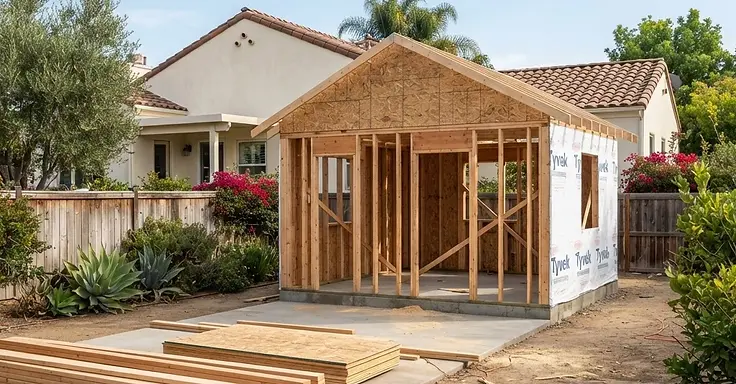
Building an Accessory Dwelling Unit (ADU) in Los Angeles is one of the smartest ways to add value and rental income to your property. At 1 Smart Build, we are a licensed Los Angeles residential general contractor (CSLB #1076428) based in Woodland Hills, and we help homeowners navigate the rules to get their projects built. The state of California has passed several laws over the last few years to make ADUs easier to build. As we head into 2027, the rules remain highly favorable for homeowners. Here is what you need to know about the current California ADU laws, including recent updates and what stays in force for 2027.
Key Takeaways
- Two Detached ADUs: AB 956 allows up to two detached ADUs on a single-family lot.
- Impact Fees Reduced: SB 1117 exempts the first 750 sq ft of an ADU from impact fees.
- Fast Approvals: Cities have 15 business days to deem an application complete and 60 days to approve it.
- No Owner-Occupancy for ADUs: You can rent out both the main house and the ADU.
- JADU Owner-Occupancy: Only required if the JADU shares a bathroom with the main house.
- Unpermitted ADUs: AB 2533 makes it easier to legalize older, unpermitted units.
What changed recently and what stays in force for 2027?
State laws for 2027 add new benefits like allowing two detached ADUs and reducing impact fees, while keeping existing protections like the 60-day approval rule and no owner-occupancy requirements.
Starting January 1, 2027, AB 956 allows homeowners to build up to two detached ADUs on a single-family lot, provided each unit is capped at 800 sq ft. Additionally, SB 1117 changes how impact fees are calculated. If you build an ADU larger than 750 sq ft, you only pay impact fees on the square footage above 750. These new laws build on the strong foundation of previous bills like AB 976, which permanently banned owner-occupancy requirements for standard ADUs, and SB 543, which clarified timelines and fee exemptions. If you are unsure about a specific local rule, we always recommend confirming with the Los Angeles Department of Building and Safety (LADBS) or the California Department of Housing and Community Development (HCD).
How fast does the city have to approve my ADU permit?
Under Government Code 66317, cities must approve ADU permits ministerially within 60 days, and SB 543 requires them to check if your application is complete within 15 business days.
Ministerial approval means the city cannot subject your ADU to discretionary review or public hearings. If your plans meet the objective building and zoning codes, they must be approved. When we submit your application, the city has 15 business days to notify us in writing if the application is complete or if items are missing. Once the application is deemed complete, the city has 60 days to approve or deny the permit. If they fail to act within 60 days, the application is legally deemed approved.
What types of ADUs can I build?
You can build detached ADUs, attached ADUs, garage conversions, or Junior ADUs (JADUs) up to 500 sq ft within the existing home.
There are several ways to add a unit to your property. A detached ADU is a standalone structure in your backyard. An attached ADU shares a wall with your main house. A conversion ADU repurposes existing space, such as a garage or a master bedroom. A Junior ADU (JADU) is a specific type of conversion that is entirely within the walls of the proposed or existing single-family home and is capped at 500 sq ft. JADUs must include an efficiency kitchen and an exterior entrance. If you are interested in converting your garage, check out our garage conversion services.
What are the size, height, and setback limits?
Cities must allow ADUs of at least 800 sq ft, up to 16 feet tall, with side and rear setbacks of no more than 4 feet.
State law guarantees that you can build an ADU of at least 800 sq ft, regardless of local lot coverage or floor area ratio limits. Depending on your city and lot size, you may be able to build up to 1,000 or 1,200 sq ft. The standard height limit is 16 feet, but this can increase to 18 feet if the ADU is within half a mile of major transit or attached to the main house. Setbacks are strictly limited: cities cannot require more than 4 feet for side and rear yard setbacks. Front yard setbacks still apply, but they cannot preclude you from building an 800 sq ft unit.
Do I have to live on the property to build an ADU?
No, AB 976 permanently removed owner-occupancy requirements for standard ADUs, meaning you can rent out both the main house and the ADU.
This is a massive advantage for real estate investors and homeowners looking to maximize rental income. However, the rules for Junior ADUs (JADUs) are slightly different. Under AB 1154, which took effect in 2026, owner-occupancy is only required for a JADU if it shares a bathroom with the main house. If the JADU has its own private bathroom, there is no owner-occupancy requirement. Note that JADUs cannot be used as short-term rentals; they must be rented for terms longer than 30 days.
What are the rules for parking and garage conversions?
If you convert your garage into an ADU, state law prohibits the city from requiring you to replace the lost parking spaces.
Garage conversions are one of the most popular and cost-effective ways to build an ADU in Los Angeles. When you convert a garage, carport, or covered parking structure into an ADU, you do not have to provide replacement parking for the main house. Furthermore, if you build a new ADU within half a mile of public transit, or within an architecturally and historically significant historic district, no new parking spaces are required for the ADU itself.
Will I have to pay impact fees for my ADU?
ADUs under 750 sq ft pay no impact fees, and under SB 1117, larger ADUs only pay fees on the square footage above 750.
Development impact fees can add thousands of dollars to a construction project. Fortunately, state law exempts all ADUs under 750 sq ft and all JADUs from these fees. Starting in 2027, SB 1117 ensures that if you build an ADU larger than 750 sq ft, the local agency cannot impose impact fees on the first 750 sq ft. You will only pay a proportional fee on the area that exceeds 750 sq ft. This significantly lowers the cost of building larger units. To estimate your project costs, use our ADU calculator.
Can I build ADUs on a multifamily property?
Yes, you can convert non-livable spaces into ADUs and build up to eight detached ADUs on a multifamily lot, depending on the existing units.
If you own a duplex, triplex, or apartment building, you have excellent options. You can convert existing non-livable spaces, such as storage rooms, boiler rooms, passageways, or attached garages, into ADUs. You are allowed to convert at least one unit, and up to 25% of the existing unit count. Additionally, under SB 1211, you can build up to eight detached ADUs on a multifamily lot, provided the number of ADUs does not exceed the number of existing units.
Can I sell my ADU separately from the main house?
Generally no, but recent laws allow separate sales if the property is built by a qualified nonprofit or under specific condominium rules.
For most single-family homeowners, the ADU and the main house must remain on the same title and cannot be sold separately. However, state law does allow separate sales if the ADU was built by a qualified nonprofit corporation to provide affordable housing. Additionally, some local ordinances may allow property owners to sell ADUs as condominiums, but this requires navigating complex local subdivision laws. For the vast majority of our clients in Los Angeles, the ADU is kept as a rental unit or used for family members.
How do I legalize an unpermitted ADU?
AB 2533 allows you to legalize unpermitted ADUs built before 2020 without facing penalties for outdated zoning or building codes, provided they are safe.
If you have an unpermitted garage conversion or backyard unit built before January 1, 2020, AB 2533 makes it much easier to legalize it. Local agencies cannot deny permits based on violations of current zoning standards or building codes, as long as the structure meets basic health and safety standards. The law also limits fees and allows for third-party code inspections. Legalizing your unit adds official square footage to your home's value and protects you from code enforcement fines.
What about fire hazard zones and hillside areas?
You can still build an ADU in fire hazard and hillside areas, but you must comply with specific fire safety and structural engineering standards.
Many homes in Los Angeles are located in Very High Fire Hazard Severity Zones (VHFHSZ) or hillside areas. State law does not allow cities to outright ban ADUs in these areas, but you will need to meet stricter building codes. This may include fire-resistant exterior materials, enclosed eaves, and potentially fire sprinklers if the main house has them or if the ADU is far from the street. Hillside projects will require a soils report and specialized structural engineering for the foundation.
What is the difference between Los Angeles City (LADBS) and LA County rules?
LADBS handles permits for properties within the City of Los Angeles, while LA County Public Works handles unincorporated areas, each with slight process variations.
While state law sets the baseline rules that all jurisdictions must follow, the permitting process differs depending on where you live. The City of Los Angeles uses LADBS, which has specific standard plans and local bulletins (like exempting ADUs from the Park Fee). Los Angeles County handles unincorporated areas and has its own planning and building departments. We work with both agencies regularly and know how to navigate their specific submission requirements and plan check processes.
What is the typical timeline and cost to build an ADU?
Permitting takes 2 to 4 months, and construction takes 3 to 6 months. Garage conversions cost about $400 per sq ft, and new construction about $500 per sq ft.
Every project is unique, but a standard timeline involves a few weeks for architectural design, followed by the city's 60-day review period. Once permits are issued, a garage conversion usually takes 3 to 4 months to build, while a new detached ADU takes 4 to 6 months. In terms of budget, garage conversions run about $400 per sq ft, and new-construction ADUs are about $500 per sq ft. For more details on pricing, read our guide on ADU costs in Los Angeles.
What are the steps to get an ADU permit?
Getting an ADU permit involves site assessment, architectural drafting, engineering, and submitting plans to the city for plan check and approval.
- Site Assessment: We visit your property to measure the space, check utility locations, and review zoning rules.
- Design and Drafting: Our team creates the floor plans, elevations, and site plans based on your needs.
- Engineering: We prepare the structural engineering plans and Title 24 energy calculations required by the state.
- City Submission: We submit the complete package to LADBS or the County for the plan check process.
- Corrections: We address any notes or corrections requested by the city plan checker.
- Permit Issuance: Once approved, we pay the city fees, pull the permit, and begin construction.
If you are ready to start your project, contact us today to schedule a consultation.
Frequently Asked Questions
How fast does the city have to approve my ADU permit?
Under Government Code 66317, cities must approve ADU permits ministerially within 60 days, and SB 543 requires them to check if your application is complete within 15 business days.
What are the size, height, and setback limits?
Cities must allow ADUs of at least 800 sq ft, up to 16 feet tall, with side and rear setbacks of no more than 4 feet.
Do I have to live on the property to build an ADU?
No, AB 976 permanently removed owner-occupancy requirements for standard ADUs, meaning you can rent out both the main house and the ADU.
Will I have to pay impact fees for my ADU?
ADUs under 750 sq ft pay no impact fees, and under SB 1117, larger ADUs only pay fees on the square footage above 750.
How do I legalize an unpermitted ADU?
AB 2533 allows you to legalize unpermitted ADUs built before 2020 without facing penalties for outdated zoning or building codes, provided they are safe.
DISCUSS YOUR PROJECT WITH 1 SMART BUILD
Licensed, bonded and insured design-build general contractor serving Los Angeles County and Southern California. Tell us about your property and goals, and we'll walk you through feasibility, permitting and a clear plan.